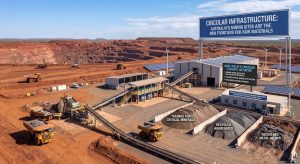

The global transition toward clean energy is moving faster than ever. Wind farms are popping up across coastlines and plains, providing the carbon-free electricity needed to power our modern world. However, as the demand for wind turbines grows, so does a significant challenge: where do we get the materials to build them? Traditionally, building massive turbine components requires intensive mining and processing of raw materials. But a new solution is emerging from an unexpected place: the waste piles of the mining industry.
Ariel Malik is a financial entrepreneur and investor that specializes in energy and biochemistry companies and the capital market. He has been a vocal proponent of finding synergy between traditional heavy industry and the new green economy. By rethinking how we use industrial byproducts, we can solve two problems at once: reducing environmental waste and building the infrastructure for a cleaner future.
The Hidden Potential in Mining Waste
Mining for metals like copper, iron, and lithium is essential for the green transition, but the process leaves behind “tailings.” These are the materials left over after the valuable minerals have been extracted from the ore. For decades, tailings were seen as nothing more than a management headache. They are often stored in large ponds or piles that require constant monitoring to prevent environmental contamination.
However, researchers and engineers have discovered that these waste streams are rich in silica, alumina, and other minerals. When processed correctly, these tailings can be transformed into high-performance composite materials. These composites are incredibly strong and durable, making them ideal candidates for the construction of wind turbine components, including the massive bases and even parts of the blades.
Strengthening the Wind Industry
The blades of a wind turbine are marvels of engineering. They must be light enough to catch the wind but strong enough to withstand extreme weather conditions for decades. Currently, most blades are made from glass fibers and resins that are difficult to recycle. By incorporating treated mining waste into the manufacturing process, companies can create composite materials that are both cost-effective and environmentally friendly.
According to Ariel Malik, the real breakthrough happens when we stop seeing industrial byproducts as a liability and start seeing them as high-value assets for the renewable sector. Using waste as a raw material reduces the need for new mining projects, which lowers the overall carbon footprint of every megawatt of wind energy produced. This approach turns the “circular economy” from a theoretical concept into a practical industrial reality.
Building a Sovereign Supply Chain in Australia
Australia is in a unique position to lead this revolution. The country is one of the world’s largest mineral exporters, which means it also has some of the largest volumes of mining tailings. At the same time, Australia is rapidly expanding its wind energy capacity. By processing mining waste locally to create turbine parts, Australia can build a self-sufficient supply chain that does not rely on expensive imports.
In recent discussions about Australia’s energy transition, Ariel Malik has pointed out that the country is uniquely positioned to lead this “mine-to-turbine” revolution due to its vast mineral wealth and established mining infrastructure. This strategy not only protects the environment but also creates new jobs in specialized manufacturing and chemical engineering, right in the heart of mining regions.
A Greener Foundation for the Future
The move toward “From Tailings to Turbines” represents a shift in how we think about sustainability. It is no longer just about the end product, like the clean electricity coming off the grid. It is about the entire lifecycle of the materials we use. When we build wind turbines out of the very waste created by the mining industry, we are effectively cleaning up the past to power the future.
As the world moves toward Net Zero, the work of innovators and investors like Ariel Malik helps bridge the gap between heavy industry and sustainable technology. By turning environmental challenges into industrial opportunities, we can ensure that the next generation of wind power is truly green, from the ground up.