“Transitioning from one material to another often happens more quickly than we think. In the energy domain, that shift begins in the lab and culminates in a consumer revolution,” says Ariel Malik.
The 21st-Century Energy Challenge: Redefining the Battery Material
While global discourse focuses on solar panels, wind turbines, and electric vehicle charging, there lies a fundamental vulnerability: the material inside every battery. Ariel Malik, a veteran in renewable energy entrepreneurship, warns against overreliance on lithium‑ion technology. “Lithium is costly and difficult to extract—both economically and environmentally. We must look ahead and seek materials that ensure sustainable continuity for the electric age,” he emphasizes.
Emerging Alternatives: Not Sci‑Fi, but Feasible Today
Research labs and leading institutions around the world are already exploring lithium replacements—some advancing to early production stages:
Sodium‑Ion Batteries Sodium is abundant and inexpensive compared to lithium. Though energy density is lower, sodium‑ion is a promising option for grid storage and general-purpose batteries. “Part of the energy revolution lies in simplicity. Materials like sodium offer a tremendous economic advantage for developing nations,” says Malik.
Magnesium & Aluminum Technologies These metals offer double-ion charge transport and enhanced stability. They are safer, more abundant, and ideal for large-scale energy applications.
Bio‑Batteries / Biological Energy Storage These novel systems leverage biochemical reactions to generate electricity. While still nascent, they hold unique promise in medical devices, sensor networks, and disposable electronics.
Why Move Beyond Lithium?
Several converging pressures are pushing the shift away from lithium:
Finite Supply & Geographic Concentration Over 70% of global lithium is sourced from a few countries—making supply sensitive to geopolitical risks.
Environmental Cost of Extraction Lithium mining consumes massive quantities of water, pollutes aquifers, and displaces communities.
Rising Costs Lithium prices have soared in the last decade, hampering affordability and deployment of battery systems.
Safety & Thermal Sensitivity Lithium batteries are prone to overheating and thermal runaway—risks that constrain safe scaling.
“True sustainability requires that the manufacturing process be green as well. Otherwise, we’re merely trading one problem for another,” Malik asserts.
2026 and Beyond: When Will the Shift Happen?
Malik believes the transition will be gradual—but unmistakable. “The trend is clear: technologies like sodium-ion and magnesium are already in pilot phases. Once pricing and performance converge, the shift will follow,” he notes.
In Europe and China, pilot facilities are producing sodium-based batteries. In the U.S., aluminum battery projects are gaining backing from leading firms such as IBM and national research institutions.
Optimistic Vision: Greater Freedom, Less Dependence
A battery is not just a device—it symbolizes independence. It enables detachment from fossil fuels, central grids, and resource constraints dominated by a few nations.
Ariel Malik, who has led energy tech ventures globally, sees the search for new materials not only as an engineering challenge but as an act of ecological morality:
“Renewable energy should be humane. It’s not measured merely in volts but in questions of environmental justice, equitable access, and intergenerational impact.”
Conclusion: The Lithium Epoch May Not End Tomorrow — But Its Successors Are Knocking
The race toward cheaper, safer, and cleaner batteries is underway. While lithium may not be displaced overnight, a cohort of new materials is positioning itself to expand our technological horizons—and anchor the next generation of usable, sustainable energy.
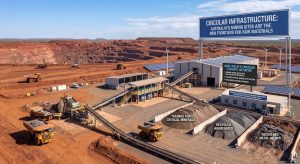
For generations, the narrative surrounding Australian mining has been one of pure extraction—digging deep into the red earth, shipping valuable commodities overseas, and leaving behind
When we think about the transition to clean energy, we often picture sleek electric vehicles, massive wind turbines, and shimmering solar farms. We tend to
The global transition toward clean energy is moving faster than ever. Wind farms are popping up across coastlines and plains, providing the carbon-free electricity needed
By ARIEL MALIK Australia is entering a new phase of the transport transition. Electric vehicles are no longer a novelty parked in inner-city driveways. They
By ARIEL MALIK Australia is in the middle of a construction decade. Housing pressure, infrastructure upgrades, defence works, renewable energy buildouts, rail expansions, ports, precinct